Share this with your friends


512-804-6564
Compass RE, LLC
Strategizing Your Austin Home Purchase or Sale—With Clarity, Strategy, and Confidence
Sept. 14, 2026
THE HEALTH OF MY HOME
Your House Has Veins — Meet Your Plumbing System
You turn on the faucet. Water comes out.

You flush. Water disappears.
And most of us are perfectly happy not thinking about what happens in between. 😂
But behind your walls, underneath your floors, and sometimes beneath your foundation is an entire system quietly keeping your home running.
Think of it as the circulatory system of your house..jpg)
Fresh water comes IN under pressure. Used water goes OUT mostly by gravity.
And a venting system helps everything drain the way it should.
That's plumbing in a nutshell.
And knowing just a little about it can save water, prevent damage and sometimes save you a considerable amount of money.
Three things every homeowner — and renter — should know
Know where the main water shutoff is.
A broken supply line is not the ideal moment to begin looking for it.
Pay attention to little leaks.
That innocent drip under a sink or toilet that keeps running isn't just annoying. It's wasting water and may be warning you about a bigger problem.
Learn what's behind the wall.
You don't need to become a plumber. But understanding where water comes into your home, where it leaves and what should not go down your drains makes you a much better caretaker of the place you call home.
And here in Austin, there's another piece to the story: conservation.
Water is one of our most valuable resources.
Our local utilities offer programs and incentives that can help residents conserve water and make homes more efficient — from water-saving improvements and rainwater collection to energy-efficiency upgrades.
I'll dig into those programs individually because some are absolutely worth knowing about.
Whether you own or rent, an efficient, well-cared-for home benefits us all.
Because real estate isn't only about buying and selling houses.
It's about understanding the place we call home.
A healthier home starts with knowing your home. I’m only a call or text away.
Posted in
Homeownership
Aug. 5, 2026
We Almost Bought the Wrong House...
I Can't Believe We Almost Bought the Wrong House...
The laughter started before dessert.
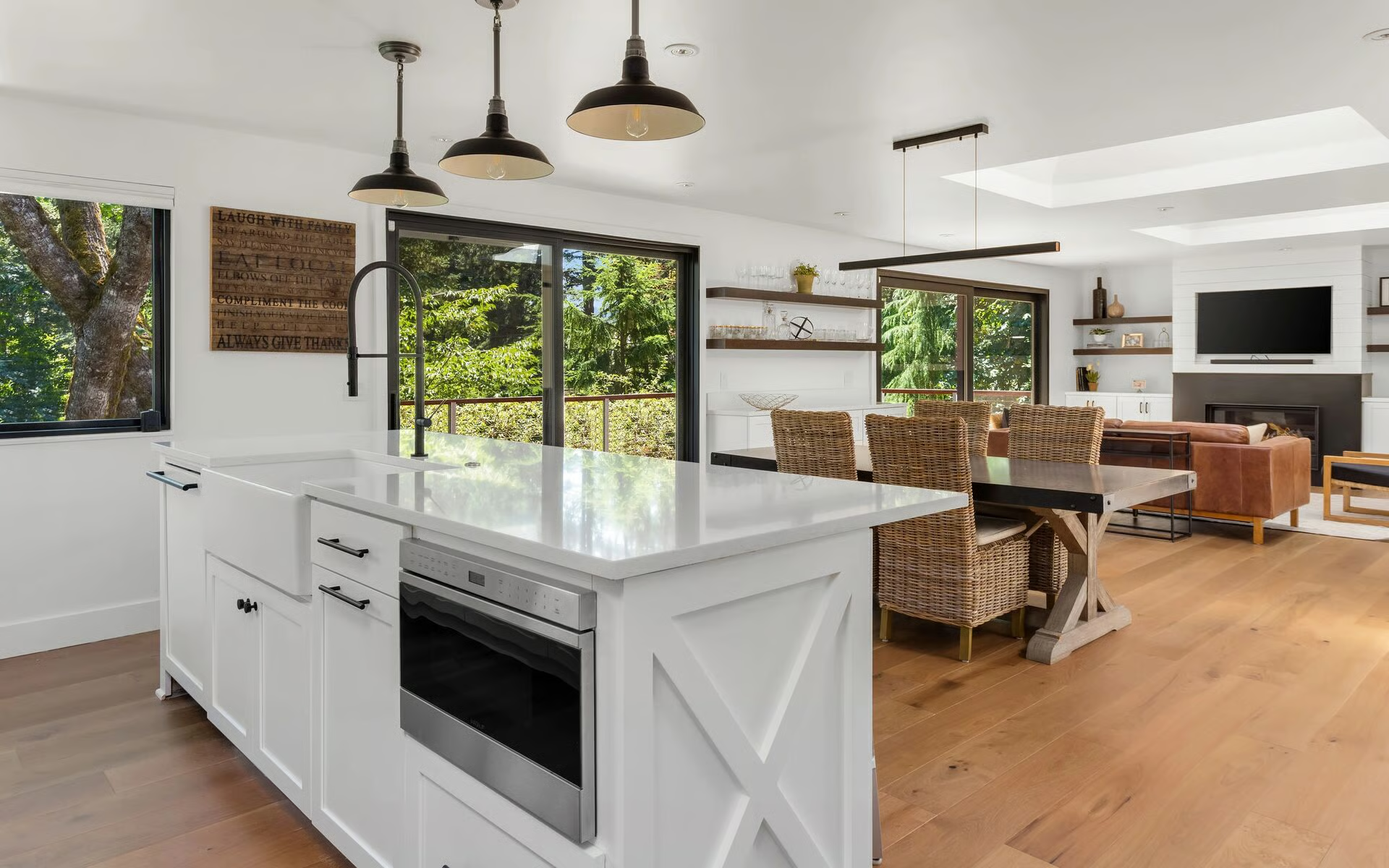
Emily had spent the afternoon preparing one of her favorite meals in the kitchen she fell in love with the moment she first walked into this house. The delicious aromas drifted into the living room, where friends gathered around the dining table. It wasn't a huge room, but the soaring ceilings filled it with light, making it feel warm, inviting, and somehow much larger than it really was.
One of her friends looked around and smiled.
Emily...you still light up every time someone compliments this kitchen.
I know, Emily laughed. I probably always will.
Another friend couldn't resist.
Remember your Pinterest board? You sent it to all of us! Every week there was a different dream house.
Everyone burst into laughter.
Oh, don't remind me! Emily said, covering her face. At one point I had mentally moved into at least twelve different houses.
Two years earlier, she and her husband, Mark, were convinced they could figure out the home-buying process on their own. Every evening they searched online, compared mortgage rates, read article after article, watched videos, downloaded every real estate app they could find, and spent nearly every weekend visiting open houses.
We thought we were becoming experts, Emily admitted. In reality...we were just becoming overwhelmed.
Every beautiful home seemed just beyond their budget. Every affordable one felt like a compromise. Their twin daughters had already claimed bedrooms in houses they would never own, and what had started as an exciting adventure slowly turned into frustration.
Then everything changed with a single conversation.
Instead of talking about houses, someone started asking questions about their life.
- What monthly payment would allow them to sleep peacefully at night?
- How much of their savings did they really want to invest?
- What kind of neighborhood would give their daughters the childhood they imagined?
- Which features were true must-haves...and which ones simply looked good on Pinterest?
- For the first time, they stopped chasing listings and started building a plan.
Emily looked around her home and smiled.
We didn't buy the house from my Pinterest board.
Her friends laughed.
No, she continued. We bought something much better.
We bought the home that matched our life.
She glanced through the large windows toward the backyard, where the twins were laughing and running through the grass with neighborhood friends.
I can't imagine us living anywhere else.
Buying your first home isn't about finding the perfect house.
It's about finding the home that fits your lifestyle, your finances, and your future.
Sometimes the happiest ending isn't buying the house you dreamed about...
It's discovering the one that was waiting for you all along.

Posted in
Buyers






July 2, 2026
Buyer's Market: Buyers Don't Buy Homes. They Buy Deals
One of the biggest misconceptions about a buyer's market is that buyers are simply looking for the lowest price. That isn't what happens in the real world.
In today's Austin Metro area buyer's market, buyers buy deals.
But what is a deal?

A deal isn't necessarily the cheapest home available. A deal is a home that delivers more value than the buyer expects for the price being paid. That value can come in many forms: thoughtful renovations, excellent condition, a desirable location, flexible financing, seller-paid closing costs, a home warranty, energy-efficient upgrades, or simply a property that is move-in ready.
This is where many sellers miss an important opportunity.
In today's buyer's market, pricing your home correctly is only part of the equation. Buyers compare every home they see. If two properties are similarly priced, the one that feels like the better value is the one that earns the showing, generates stronger offers, and often sells first.
Smart sellers don't compete on price alone—they compete on value.

Sometimes that means completing strategic repairs before listing. Other times it means improving presentation, investing in professional photography, highlighting upgrades, or offering incentives that make purchasing easier for buyers. The goal is simple: position your home so buyers immediately recognize it as an exceptional value.
For buyers, the lesson is just as important.
A buyer's market creates more choices, greater negotiating power, and opportunities to secure favorable terms. But the best opportunities don't stay available forever. When a property is well-priced and offers outstanding value, other buyers notice it too.
Whether you're buying or selling, success in a buyer's market isn't about chasing the lowest price. It's about understanding value.
The strongest buyers recognize it.
The smartest sellers create it.
If you're wondering whether you're looking at a true deal—or how to position your home so buyers see it as one—I'd be happy to help you build the right strategy for today's market.
Posted in
Market Updates
April 24, 2026
Spring Market Is Here—But What Does That Really Mean for You?
 Spring Market Is Here—But What Does That Really Mean for You?
Spring has always been known as the busiest season in real estate—and for good reason.
The weather is better, families are planning moves before the next school year, and more homes hit the market.
But what does that actually mean for you as a buyer or seller?
First, let’s talk about buyers.
Spring naturally brings more people into the market. That increased demand creates competition, which can feel overwhelming at first glance.
Now, sellers.
They are aware of this seasonal demand and often feel confident pricing their homes accordingly. This is why you may notice stronger list prices or fewer immediate price reductions.
But here’s the part that often gets overlooked…
With more homes coming to market, buyers also gain something very important: options.
More inventory means:
-
A better chance of finding the right fit
-
Less pressure to settle
-
And in some cases, opportunities that are not obvious at first glance
This is where strategy becomes everything.
Because the question is not whether spring is a “good” or “bad” time to buy or sell.
The real question is: How do you navigate the dynamics of this market in a way that works for you?
Every situation is different.
Every buyer has a different financial comfort level.
Every seller has a different motivation.
That’s why having a clear plan—and the right guidance—makes all the difference.
If you’re curious about what this spring market means specifically for you, I’d be happy to walk you through it.
April 2, 2026
Living Car‑Light In South Austin: Everyday Life Explained

If you are hoping to drive less in South Austin, 78745 gives you a real shot at it. This ZIP code is not the kind of place where most people can ditch a car completely, but it can support a car-light lifestyle with the right home location and daily routine. If you want to know what everyday life actually looks like here, and what to check before you buy, this guide will help you think through it clearly. Let’s dive in.
View More
Posted in
Everyday Life
March 24, 2026
How An Integrated Mortgage Team Speeds Closings In Round Rock
Buying in Round Rock moves fast, and the best homes still draw multiple offers. If you want your offer to stand out and your closing to stay on track, your financing needs to be organized, verified, and in motion before you write. That is where an integrated mortgage team makes all the difference.
In this guide, you will learn how a coordinated agent, loan officer, processor, and title company work together to remove common delays. You will also see a simple timeline, key questions to ask, and a ready-to-use checklist for your offer packet. Let’s dive in.
View More
Posted in
Everyday Life
March 5, 2026
When To List Your Central Austin Home For A Strong Sale

Thinking about selling your Central Austin home and wondering when timing really matters? You’re not alone. The right week can lift your price, shorten days on market, and reduce stress. In this guide, you’ll see how national seasonality meets Austin’s unique spring rhythm, plus a practical timeline you can follow to launch with confidence. Let’s dive in.
Posted in
Everyday Life
Feb. 19, 2026
Round Rock Housing And Commute Guide For Austin Workers

If you love Round Rock’s value and parks but work in Austin, the daily trip is likely your biggest question. You want a home that fits your budget and lifestyle without turning your commute into a second job. In this guide, you’ll see realistic drive times, your best transit options, and which Round Rock areas pair well with Austin job hubs. You’ll also learn how to test your route before you buy. Let’s dive in.
View More
Posted in
Everyday Life